Saturday, March 14, 2009

Monday, March 2, 2009


Saturday, February 28, 2009
Poetry Recitation Champions
Way to go, 6th graders!!
You did a fantastic job learning and reciting
"If"
by Rudyard Kipling.
You did a fantastic job learning and reciting
"If"
by Rudyard Kipling.
Congratulations!


Thursday, February 19, 2009
Lay vs. lie
Learn the principal parts for the verbs "to lay" and "to lie."
Write them at the top of every homework paper and every test.
Remember the principal parts: ________, ________, ________.
The first blank is the present. Think: Today, I _____.
The second blank is the past. Think: Yesterday, I _____.
The third blank is the present participle. Think: I have _____ before.
Lay means to put or place something.
The principal parts are lay--laid--laid.
Think: Today, I lay the book down. Yesterday, I laid the book down. I have laid the book down before.
Lie means to rest or recline.
The prinicpal parts are lie--lay--lain.
Think: Today, I lie down for a nap. Yesterday, I lay down for a nap. I have lain down for a nap before.
For practice, and we all need to practice these (even Mrs. Dye), go to these online quiz links.
If you want, open them in a new tab (press Ctrl-T and choose "open in new tab"). That way you can take the quiz and post your grade in a comment on this blog. (You do not need to register; choose "anonymous" and leave your name within the comment.) The comments will not show up until I enable them to, so I am the only one who sees your score.)
Quiz 1
Quiz 2
Quiz 3
Quiz 4
Quiz 5
Quiz 6
Memorize them!
Write them at the top of every homework paper and every test.
Remember the principal parts: ________, ________, ________.
The first blank is the present. Think: Today, I _____.
The second blank is the past. Think: Yesterday, I _____.
The third blank is the present participle. Think: I have _____ before.
Lay means to put or place something.
The principal parts are lay--laid--laid.
Think: Today, I lay the book down. Yesterday, I laid the book down. I have laid the book down before.
Lie means to rest or recline.
The prinicpal parts are lie--lay--lain.
Think: Today, I lie down for a nap. Yesterday, I lay down for a nap. I have lain down for a nap before.
For practice, and we all need to practice these (even Mrs. Dye), go to these online quiz links.
If you want, open them in a new tab (press Ctrl-T and choose "open in new tab"). That way you can take the quiz and post your grade in a comment on this blog. (You do not need to register; choose "anonymous" and leave your name within the comment.) The comments will not show up until I enable them to, so I am the only one who sees your score.)
Quiz 1
Quiz 2
Quiz 3
Quiz 4
Quiz 5
Quiz 6
Tuesday, February 10, 2009
8th grade: Irish Potato Famine -- 1845


Read about the Great Irish Potato Famine in these two well-researched and believable books: Nory Ryan's Song and Maggie's Door by Patricia Reilly Giff.
Having descendants from Ireland, Giff researched the history, the land, and the people accurately, which is portrayed in the authenticity of her storytelling.
Also, check out this presentation of the Irish Potato Famine.
Saturday, January 31, 2009
February Focus

People who gave unselfishly to the Underground Railroad and Abolition movement were often not regarded for their efforts during their lifetime. In our country, these figures are keys to our national celebration of Black History Month this February.
To learn more about these people, visit the bulletin board.
Tuesday, January 27, 2009
7th grade: Maps of Pilgrim's Progress
After finishing Pilgrim's Progress, the 7th graders end-of-book project was to design a map of Pilgrim's journey with the major places and people. These are a few of the eighteen maps they did.
Great job!


Wednesday, December 24, 2008
How we should play the game
Sports activities have been involved in schools for decades.
This story is a beautiful example of the attitude we should display during those games.
Sure, we should play the game to best of our ability, but how different would our schools be if we displayed the attitudes as those in this story.
Think about it.
This story is a beautiful example of the attitude we should display during those games.
Sure, we should play the game to best of our ability, but how different would our schools be if we displayed the attitudes as those in this story.
Think about it.
Thursday, October 30, 2008
Pilgrim's Progress
Seventh graders begin reading The Pilgrim's Progress today. Those students who were here in the fourth grade were privileged to read a children's version, but today, we start Pilgrim's Progress in Today's English. The length is about the same, though some of the more archaic language is updated.
"Why We should read The Pilgrim's Progress" is an interesting article about how Pilgrim's journey is our journey.
"Why We should read The Pilgrim's Progress" is an interesting article about how Pilgrim's journey is our journey.
Monday, October 20, 2008
Homonyms

Homonyms are words that sound the same but have different meanings.
haul--hall---------pale--pail-----------rain--rein--reignThis week's spelling words for grades 6, 7, and 8 are all homonyms.
For some fun games, see these sites:
FunBrain
Concentration at Quia
Self-Study Homonym Quizzes
To help you with your study, a list of short definitions of many homonyms is found here.
Tuesday, October 14, 2008
GeoBee, anyone?
Check out the new link under Geography in the sidebar.
See how many questions you can complete!
See how many questions you can complete!
Saturday, October 11, 2008
Memorization
For any parents reading (kids, go get you parent and have them read this!), you will be interested to know the selections your child has memorized as a group during our classes this year.
Memorization is an important tool in a student's life. Memorization causes students of begin to appreciate language and the sound it makes when it is carefully constructed. Also, students have young minds which can make memorization especially easy andthe ability to recall memorized material decades later. The article, "In Defense of Memorization," is particularly helpful and interesting to read.
All three grades (6th, 7th, and 8th) learned "Ideas have Consequences" which is found in the sidebar. Since we are reading The Hobbit in the sixth grade, they worked on ten stanzas from "Over the Misty Mountains Cold" as the seventh grade memorized "A Mighty Fortress is our God" and a small part of Martin Luther's famous speech before the Diet of Worms. Both sixth and seventh grades learned "The Night has a Thousand Eyes" and "The Vulture." The next memorization selection for both grades is "The Quality of Mercy" from Shakespeare's The Merchant of Venice.
The eighth graders memorized "The Charge of the Light Brigade" and has begun to work on "The Gettyburg Address."
More selections are ready and waiting for the rest of the year!
Thursday, October 2, 2008
The Hobbit, Chapter 8: Flies and Spiders
Do these pictures make you think of the "Flies and Spiders" chapter?
These are incredible webs!


These are incredible webs!


Sunday, September 28, 2008
Abraham Lincoln's World: pages 143-222
Sunday, September 21, 2008
Enjoying life in our world
Often school and all its work, sports practice and games, and requirements at home all seem to merge together and demand our attention at the same time. Frustration usually results. Tempers flare. We are happy with ourselves or anyone else.
Times like those keep us from seeing the forests for the trees. When things get too frustrating, take a few minutes and enjoy the wonderful world God has made. When I do this, I realize how minor my frustrations are in comparison to the grandeur of the universe.
Look at some of the links in the sidebar under "The Heavens Declare the Glory of God." The Astronomy Sight of the Day is always fascinating. Once at that site, you can click on the archives and find lots of interesting pictures of our universe.
The World Sunlight Map is a current picture of how sunlight is distributed throughout the world. It is current. If you check back an hour or so later, you will see how the sunlight has moved.
The Moon Phase link is to the current phase of the moon. The moon is always interesting to me.
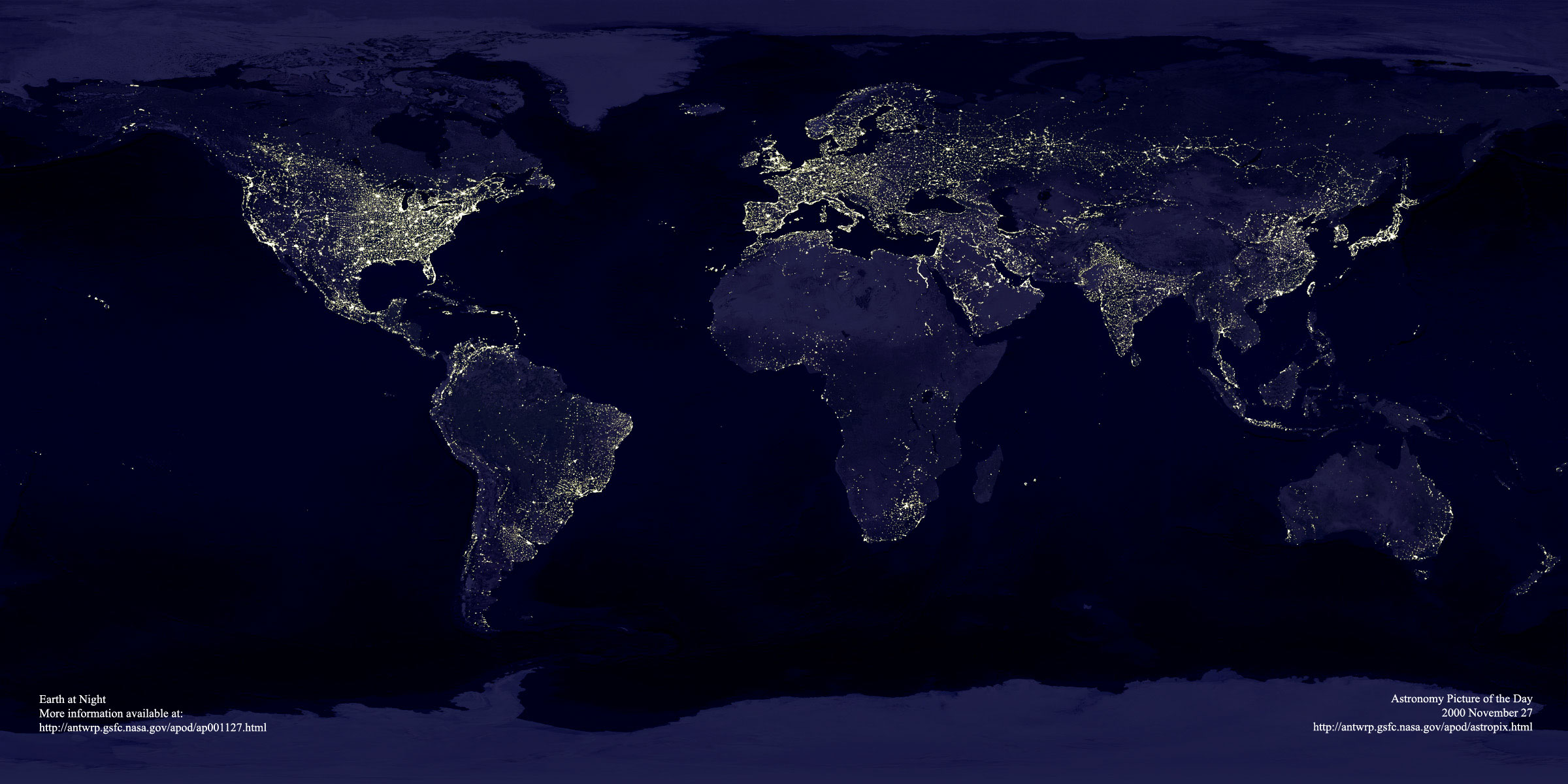
A new link, Night Lights on Earth, shows the lights on Earth from space.
The more we know about and see this wonderful world, the more we will appreciate this creation and the more gratitude we owe to the Creator God.
Also, notice the new text in the sidebar, Children's Beatitudes. Recently, I heard a minister from Barbados share this during his sermon. I remembered enough of it to find the entire text online later. It seems that these thoughtful statements originated in Zimbabwe. Good thoughts to ponder.
Monday, September 8, 2008
Abraham Lincoln's World: Garibaldi
Use these links to answer "When Abraham Lincoln was a Boy in Indiana," question 22 about Garibaldi:
Monday, September 1, 2008
The World of Christopher Columbus (7th grade)
For each link, hold cursor over the link, right click mouse, click on Open in a New Tab. Having both tabs open enables you to move back and forth without losing the first page.
Use the dictionary! Look up any words you do not know. Be sure to write the word and a short definition down in your answers. For example, if you do not know what the word monastery means, then look it up in this online dictionary.
- Again, hold cursor over the link "online dictionary" in the last sentence. It is bold-faced and stands out to show you it is a link.
- Right click mouse, then click Open in a New Tab.
- Once the dictionary page opens, you can type in the word to look up OR you can cut-and-paste the word into the search box. Leave the dictionary tab open so you can use it again.
- When you look up the word monastery, you find that it means "a house or place of residence occupied by a community of persons, esp. monks, living in seclusion under religious vows." When you use the word monastery in your answer, put a simple definition beside it in parenthesis like this: "...lived in a monastery (place where monks live)....".
...........................................................................................................................................
Links for The World of Christopher Columbus:Pages 24-64
1. Printable map of Africa, map of the Gambia, another map of the Gambia, map of Cape Verde.
5. Use these Fra Mauro links to answer the questions on your reading sheet:
Choose one of these two activities:
Activity 1:
- Print a copy of this Fra Mauro outline map. (Remember to open this in a new tab!)
- Keep the printed map in front of you and open up this link. Look carefully. Can you see the land and the water? With a light brown or green colored pencil, shade in the land areas. With a light blue colored pencil, shade in the water areas. The map still looks strange, doesn't it? Try this: turn it upside down. Does it look more familiar now? Compare it with this image (remember to open in a new tab!). The difference is explained in the last nine lines of this link. Isn't that interesting?!
Activity 2:
- This is named Fra Mauro. What is it?
- Here is a look from a little farther away. Notice the white arrow?
- Find Fra Mauro here. Look for number 14. It is located in one of the darker areas called mare, which means "sea" in Latin. Additional help in finding #14: from in the center, look west (to the left) until you find "Copernicus," then look south. You will see #12 and to its right will be #14.
- Why do you think it is named Fra Mauro? Go here, scroll down about halfway to "The Moon." Read the description beside the "crater" column. Compose a good written answer.
- Use the dictionary link above and look up "fra." What does it mean?
9. Italian Renaissance artists: Gozzoli, Botticelli, Donatello, Fra Angelico, Brunelleschi, Ghiberti, and Verrochio.
Pages 90-114
2. Read this link about Ptolemy. Record your findings on your answer pages.
Pages 360-400
4. Find Albrecht Durer information here. Find the two painting which he did of Emperor Maximilian here and here.
Monday, August 25, 2008
Bilbo, Gandalf, Thorin and company
 The long-awaited day has arrived.
Several sixth graders have waited for the big green books to be pulled from the shelves.
The Hobbit is now in their eager hands. The first assignment is to take Tolkein's description of a hobbit and illustrate their visual image of a hobbit.
The students are about to embark on an expedition that will remain in their memories for years to come.
Find out your Hobbit Name or make some Hobbit runes.
And don't miss a modern day hobbit house.
Sunday, August 17, 2008
Words and Rice
Challenge yourself! And send some rice to needy people at the same time. Grain by grain.
The link to Free Rice is in the sidebar under Vocabulary Practice .

As you begin, first go to the OPTIONS tab. Once there, choose the level below that corresponds to your grade level. If it is too easy, choose a higher level; if too hard, choose a lower level.
6th graders: Start at Level 10
7th graders: Start at Level 15
8th graders: Start at Level 20
After choosing your option, click on the HOME tab and begin.
Have fun and learn!
Tuesday, August 12, 2008

Tuesday, July 15, 2008
Tuesday, July 8, 2008
Catechism
Print the Westminster Shorter Catechism here.
Holly Dutton's CDs of catechism songs that we sing in class.
Westminster Shorter Catechism with Scripture proofs.

Tuesday, July 1, 2008
Parent Helps
As parents, we often want to help our children succeed in every area of their lives. Helping them succeed academically is often difficult because we sometimes don't know exactly what to do or how to do it. Below are some articles that I have found helpful. If you have any questions or comments, please feel free to post them here.
Encouraging Your Child to Work
Subscribe to:
Posts (Atom)